
In the Pacific Northwest, home electrical systems are working harder than ever—and our electrical needs are evolving. Our homes now face massive power demands year-round, especially as home comfort systems battle rainy Oregon winters and record-breaking summer heat. We are modernizing our lives with high-energy technology like heat pumps and EV chargers, while simultaneously adding the constant draw of induction stoves and full-time home offices. Collectively, these upgrades pull more power than ever before.
While the electrical panels in many older homes simply weren’t built to carry this much electrical demand, even newer systems have their limits. When an electrical panel is undersized to meet demand, it stops being a simple utility box and becomes a fire hazard. Whether you are preserving a historic Portland property or expanding your home in Lake Oswego, having proper electrical panel sizing is the only way to safely power a modern lifestyle.
In this blog, we explore the vital role your electrical panel plays in your home’s safety, how panels are sized for modern demands, and why annual maintenance is the secret to a fire-safe home.
Common Factors that Strain a Home Electrical System
A panel that was perfectly adequate ten years ago may suddenly be too small today. In the Portland Metro area, we typically see four main factors push a system to its limit:
- The Gas-to-Electric Shift: Many homeowners in areas like Gresham and Troutdale are ditching gas for high-efficiency electric heat pumps. These upgrades can triple the load on a home’s wiring overnight.
- Modern “High-Draw” Additions: Features like Level 2 EV chargers, hot tubs, and saunas require heavy-duty, dedicated circuits that even “modern” panels from the early 2000s might not have space for.
- Major Renovations: Planning a kitchen remodel? Modern codes require several appliances (like your fridge, microwave, and dishwasher) to have their own dedicated paths. This means your electrical panel needs more physical “slots” and a higher total capacity to prevent multiple appliances from tripping the same breaker.
- The Home Office Surge: With more Oregonians working from home, the constant draw from tech setups and dedicated office cooling adds a “baseline” load that eats up capacity.
While each of these upgrades improves your quality of life, they collectively push your home electrical system to its physical limits. When your electrical panel can no longer accommodate these modern “must-haves,” an upgrade is the only way to ensure your electrical system stays fully functional and protected from dangerous electrical failure.
Understanding Your Electrical Panel: A Visual Guide
Before you call an electrician to your home, it helps to know what you’re looking at. Use this guide to demystify the “nerve center” of your home and understand how each component works together to keep your power flowing safely.
What is an electrical panel?
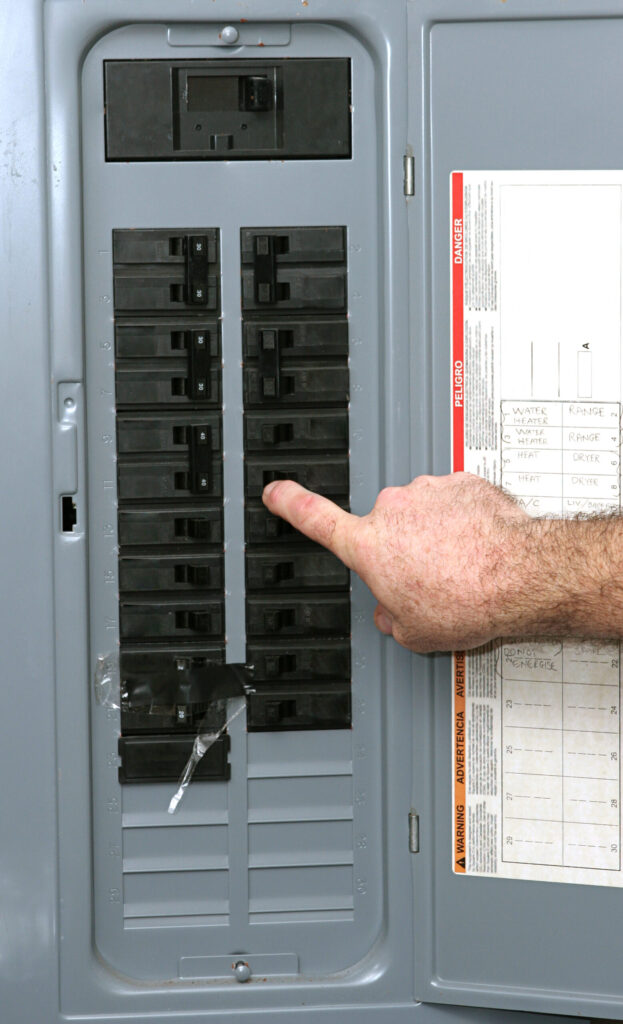
Also known as a breaker box or circuit breaker panel, this large metal cabinet acts as the primary distribution point for your home. It receives high-volume power from the utility line and houses all the switches that divide that power among the various areas of your house.
What are the switches inside the panel?
These switches are called Breakers. Breakers sit at the very start of every electrical line in your home. Each one has a number printed on the end of the handle (typically 15, 20, or 30).
This number indicates the “amperage”—the maximum amount of electricity that specific wire can safely carry. If you plug in too many devices and the wire begins to get hot, the breaker automatically flips to the “OFF” position. By sitting at the “start” of the line, the breaker can cut power instantly before a heat issue reaches the rest of your home.
What Is a circuit?
A circuit is the actual loop of wire that carries electricity from the breaker switch out to your outlets and lights. You can identify which circuit is which by the handwritten or printed labels located next to the switches (e.g., “Kitchen Outlets” or “Master Bedroom”). Because the breaker and the circuit are connected, a problem at an outlet in your bedroom will trip the specific switch labeled for that room.
Capacity vs. Space: How Your Electrical Panel is Sized
Understanding how breakers and circuits function is just the first step; the real challenge is ensuring your electrical panel is large enough to support all of them without overworking the system. Whether our electricians are inspecting a historic property in Lake Oswego or a modern build in Happy Valley, we evaluate the panel based on two specific factors to ensure your home stays powered safely:
- Amperage (Electrical Capacity): Look for the Main Breaker—it’s usually the largest switch at the very top or bottom of the panel. The number stamped on it (like 100, 150, or 200) tells you the total volume of power (amps) your entire home can handle at once.
- Breaker Space (Physical Slots): These are the physical “stalls” available for circuit breakers. If you see metal “knockouts” or empty spaces where a switch could go, you have room to grow. If every slot has a switch, your panel is “full.”
Common Electrical Panel Sizes: What Does Your Portland Home Need?
When we determine the right size for your home, we aren’t just looking at your current needs—we are looking for a “safety cushion.” A panel should be able to handle your highest possible power draw (like a hot summer afternoon with the AC, laundry, and oven running) without reaching its maximum limit.
In the Portland area, a 100-amp service panel may be sufficient for smaller, vintage homes. However, any homes adding central air or electric heat will likely need a higher capacity to avoid frequent “trips.”
- 100-Amp: The bare minimum for small homes.
- 150- to 200-Amp: The modern standard for most homes in our area. As central air has gone from a luxury to a necessity in the Pacific Northwest (PNW), this is the size required to handle hot summer spikes and modern electric heat pumps.
- 400-Amp: Necessary for very large homes or high-energy demands like multiple EV charging stations and hot tubs.
- Solar-Ready Panels: In Oregon, regulations often encourage “solar-ready” infrastructure for future renewable energy.
Safety Check: How Do I Know My Electrical Panel Is Still Safe?
While an electrical panel can last anywhere from 20 to 50 years, its lifespan depends heavily on the quality of its components and how much demand it faces. Because your panel is the primary safeguard between the high-voltage utility lines and your home’s interior wiring, its condition isn’t just a matter of convenience—it’s a matter of safety.
We recommend a professional electrical safety inspection every year to address a hidden process called thermal expansion. As electricity flows, your wires naturally heat up and expand; when the power stops, they cool and contract. Over time, this constant “breathing” can loosen the screws holding your wires in place. These loose connections create resistance and extreme heat, which are leading causes of electrical fires. An annual check allows us to tighten these terminations before they become hazardous.
5 Warning Signs that Your Electrical Panel Needs Urgent Attention
Certain signs require an immediate emergency inspection. Contact a professional right away if you notice these red flags:
- Frequently Tripping Breakers: If you’re resetting the same switch over and over, that circuit is chronically overloaded. This is often a sign that the demand from your modern appliances is outpacing the panel’s capacity.
- Flickering Lights: Do your lights dim or flicker when the microwave, vacuum, or hair dryer turns on? This suggests your system is struggling to distribute power consistently across your home.
- Physical Damage: In our damp Oregon climate, moisture can lead to rust and corrosion inside the box. Look for any visible decay or dark scorch marks around the breakers.
- Heat or Noise: A healthy panel should be silent and cool. Buzzing, humming, or a metal cover that feels warm to the touch are major indicators of internal electrical issues.
- Outdated Brands: If your home in areas like Milwaukie or Oregon City still uses a Federal Pacific (Stab-Lok) or Zinsco panel, you are at a higher risk. these brands are known fire hazards because they often fail to trip during an overload, allowing wires to overheat undetected.
While these signs indicate an immediate need for repair, many electrical hazards remain hidden behind the panel cover. Whether you’ve noticed these red flags or simply haven’t had your system checked in years, a comprehensive electrical safety inspection is the only way to catch loose connections and capacity issues before they lead to a fire.
Power Your Future with 3 Mountains Home Services
Whether you’re adding an EV charger or it’s time for your annual safety check, 3 Mountains Home Services is here to help. We offer expert electrical repairs and panel upgrades across the Milwaukie area. Don’t wait for a tripped breaker. Act today for peace of mind and protection you can trust!
👉 Schedule your annual Electrical Safety Inspection today!
3 Mountains Home Services, Your Partner for Long-Term Home Comfort and Safety
Frequently Asked Questions:
Q: Is my small electrical panel actually a fire hazard?
A: The amperage of a panel determines the maximum electrical load of a home. Ensuring that your panel has sufficient amperage is important for preventing electrical issues. A panel that is too small can be a major safety hazard because it poses a risk of the wires overheating and possibly starting a fire.
Q: My home is older; is my 60-amp service still safe to use?
A: Many older homes in the Milwaukie area still have 60-amp service panels. While this was sufficient in the past, it’s rarely enough for modern households.
Q: Why do my kitchen appliances keep tripping the breakers?
A: If your toaster and coffee maker trip the breaker every morning, your kitchen likely needs more “dedicated” circuits. National electrical code requires at least two 20-amp circuits just for kitchen countertops. If your electrical panel is full, you’ll need an upgrade to add these safety lines.
Q: What if my panel is full but I’m adding an extra bedroom or a home addition?
A: A home addition requires new circuits for lights and outlets. If you open your panel and see every slot is occupied, your panel is “full.” Depending on your home’s total amperage (load capacity), an electrician might be able to install a sub-panel to add more physical slots without needing to upgrade your entire electrical service.
Q: Does my square footage affect my panel size?
A: Yes. We perform a “load calculation” based on your square footage to determine the baseline power your home needs for lighting and outlets before factoring in major appliances.
Q: Why do large appliances take up so many “Physical Slots”?
A: Major 240-volt appliances (like dryers, ACs, or EV chargers) require Double-Pole Breakers. These are twice as wide as standard breakers and take up two physical slots.
Q: What if my panel is full but I’m adding a room?
A: If every slot is occupied, your panel is “full.” If you’re adding a bedroom or a home office in your Portland-area home, you’ll likely need new circuits. Depending on your total amperage, an electrician might install a sub-panel to add more physical slots without needing to upgrade your entire electrical service.